Buy latexbodys.com ?
We are moving the project
latexbodys.com .
Are you interested in purchasing the domain
latexbodys.com ?
domain@kv-gmbh.de · 0541-91531010
Buy latexbodys.com ?
How long can one wear a lingerie bodysuit?
The length of time one can wear a lingerie bodysuit depends on personal comfort and the specific design of the bodysuit. Some people may find it comfortable to wear a lingerie bodysuit for several hours, while others may prefer to wear it for shorter periods of time. It's important to listen to your body and remove the bodysuit if it becomes uncomfortable or restrictive. Additionally, the material and construction of the bodysuit can also impact how long it can be worn comfortably. **
How do the rated voltage, nominal voltage, and operating voltage differ?
The rated voltage is the maximum voltage that a device can safely handle without being damaged. The nominal voltage is the standard voltage level at which a device is designed to operate efficiently. The operating voltage is the actual voltage at which a device is currently operating. These three values can differ, with the rated voltage being the highest, followed by the nominal voltage, and the operating voltage fluctuating within a certain range depending on the conditions. **


Similar search terms for Voltage
Top-Angebote
Products related to Voltage:
-
S1 Pro Station (Low Voltage)S1 Pro Station 1000W (Low Votage) Product Description This listing features the S1 Pro 1000W base station, identifiable by its distinct hexagonal filter design at the bottom (as shown in product images). With enhanced suction power and optimized...539,99 $*Shipping: 0,00 $Secure redirect to the provider
-
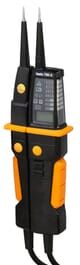
Testo 750-1 Voltage TesterThe Testo 750-1 Voltage Tester is designed to be your dependable tool for testing electrical systems and equipment. Featuring an all-round LED display and unique fibre-optic technology, it ensures voltage indication is clear and visible from any position. This voltage tester meets the latest standards and provides the essential functions needed for comprehensive electrical testing. Key Features All-round LED Display: Patented design ensures voltage indication is visible from any position. Fibre-optic Technology: Guarantees optimal voltage indication clarity. Compliance with Standards: Meets the latest voltage tester standard EN 61243-3:2010. High Safety Standards51,00 £*Shipping: 5,00 £Secure redirect to the provider
-
Testo 750-2 Voltage TesterThe Testo 750-2 Voltage Tester is your dependable tool for testing electrical systems and equipment for voltage or de-energization. Enhanced with unique fibre-optic technology and an all-round LED display, it ensures clear voltage indication from any position. The Testo 750-2 offers additional functionality over the 750-1, including single pole voltage testing, making it ideal for quickly determining if conductors are live. Key Features All-round LED Display: Ensures clear and distinct voltage indication from any position. Fibre-optic Technology: Provides optimal clarity for voltage readings. Single Pole Voltage Testing: Allows for quick determination of live conductors.78,60 £*Shipping: 0,00 £Secure redirect to the provider




-
Where can one find the missing voltage difference between battery voltage and consumer voltage?
The missing voltage difference between battery voltage and consumer voltage can be found in the electrical components that make up the circuit between the battery and the consumer. This could include resistors, capacitors, inductors, or other components that may be affecting the voltage. By analyzing the circuit and using techniques such as Kirchhoff's voltage law and Ohm's law, one can identify and calculate the missing voltage difference. Additionally, using a multimeter to measure the voltage at different points in the circuit can help pinpoint where the voltage drop is occurring. **
-
How do medium voltage, high voltage, and extra-high voltage affect the human body?
Medium voltage, high voltage, and extra-high voltage can all have varying effects on the human body depending on the level of exposure. Medium voltage (1kV to 69kV) can cause burns and muscle contractions, high voltage (69kV to 230kV) can lead to severe burns, cardiac arrest, and even death, while extra-high voltage (above 230kV) can result in instant death due to the high levels of electrical energy passing through the body. It is crucial to exercise caution and follow safety protocols when working with or near these voltage levels to prevent any harm to individuals. **
-
Which voltage converter?
The best voltage converter to use depends on the specific devices you are trying to power and the countries you will be traveling to. For most electronic devices, a voltage converter that can handle a range of voltages (such as 100-240V) is recommended. Additionally, it is important to consider the wattage requirements of your devices to ensure the voltage converter can handle the power load. It is also a good idea to look for a converter that has built-in surge protection to safeguard your devices from power spikes. **
-
How to calculate resistance and zero voltage using voltage drop?
To calculate resistance using voltage drop, you can use Ohm's Law, which states that resistance (R) is equal to voltage (V) divided by current (I). So, if you know the voltage drop across a resistor and the current flowing through it, you can use Ohm's Law to calculate the resistance. To calculate zero voltage using voltage drop, you can use the concept that zero voltage is the reference point in a circuit. If you measure a voltage drop across a component and it is zero, it means that there is no potential difference across that component, indicating that it is at the same voltage level as the reference point. This can be useful for troubleshooting and understanding the behavior of a circuit. **

What is the maximum voltage drop in low-voltage networks?
The maximum voltage drop in low-voltage networks is typically limited to 5% of the nominal voltage. This means that for a 120V system, the maximum allowable voltage drop would be 6V (5% of 120V). This limit is set to ensure that the voltage at the end of the network is still within an acceptable range for proper operation of connected devices and equipment. Excessive voltage drop can lead to reduced performance and potential damage to electrical equipment. **
What is the difference between high voltage and normal voltage?
High voltage refers to electrical voltage levels that are significantly higher than normal operating levels, typically above 1000 volts. High voltage is used in power transmission and distribution systems to minimize energy losses over long distances. Normal voltage, on the other hand, refers to the standard operating voltage levels used in everyday electrical devices and systems, typically ranging from 110 to 240 volts. High voltage requires special safety precautions and equipment due to the increased risk of electric shock and insulation breakdown, while normal voltage is the standard level used for most household and commercial electrical applications. **
Top-Angebote
Products related to Voltage:
-
Omni Station (Low Voltage)eufy Omni Station (Low Votage) Authentic part manufactured by eufy. Compatible with X10 Pro Omni. Note: Power cord and dust bag are not included, You can purchase it through those links: Power cord: https://www.eufy.com/products/t2276111-91 Dust...335,00 $*Shipping: 0,00 $Secure redirect to the provider
-
S1 Pro Station (Low Voltage)S1 Pro Station 1000W (Low Votage) Product Description This listing features the S1 Pro 1000W base station, identifiable by its distinct hexagonal filter design at the bottom (as shown in product images). With enhanced suction power and optimized...539,99 $*Shipping: 0,00 $Secure redirect to the provider
-
How long can one wear a lingerie bodysuit?
The length of time one can wear a lingerie bodysuit depends on personal comfort and the specific design of the bodysuit. Some people may find it comfortable to wear a lingerie bodysuit for several hours, while others may prefer to wear it for shorter periods of time. It's important to listen to your body and remove the bodysuit if it becomes uncomfortable or restrictive. Additionally, the material and construction of the bodysuit can also impact how long it can be worn comfortably. **
-
How do the rated voltage, nominal voltage, and operating voltage differ?
The rated voltage is the maximum voltage that a device can safely handle without being damaged. The nominal voltage is the standard voltage level at which a device is designed to operate efficiently. The operating voltage is the actual voltage at which a device is currently operating. These three values can differ, with the rated voltage being the highest, followed by the nominal voltage, and the operating voltage fluctuating within a certain range depending on the conditions. **
-
Where can one find the missing voltage difference between battery voltage and consumer voltage?
The missing voltage difference between battery voltage and consumer voltage can be found in the electrical components that make up the circuit between the battery and the consumer. This could include resistors, capacitors, inductors, or other components that may be affecting the voltage. By analyzing the circuit and using techniques such as Kirchhoff's voltage law and Ohm's law, one can identify and calculate the missing voltage difference. Additionally, using a multimeter to measure the voltage at different points in the circuit can help pinpoint where the voltage drop is occurring. **
-
How do medium voltage, high voltage, and extra-high voltage affect the human body?
Medium voltage, high voltage, and extra-high voltage can all have varying effects on the human body depending on the level of exposure. Medium voltage (1kV to 69kV) can cause burns and muscle contractions, high voltage (69kV to 230kV) can lead to severe burns, cardiac arrest, and even death, while extra-high voltage (above 230kV) can result in instant death due to the high levels of electrical energy passing through the body. It is crucial to exercise caution and follow safety protocols when working with or near these voltage levels to prevent any harm to individuals. **
Similar search terms for Voltage
-
Testo 750-1 Voltage TesterThe Testo 750-1 Voltage Tester is designed to be your dependable tool for testing electrical systems and equipment. Featuring an all-round LED display and unique fibre-optic technology, it ensures voltage indication is clear and visible from any position. This voltage tester meets the latest standards and provides the essential functions needed for comprehensive electrical testing. Key Features All-round LED Display: Patented design ensures voltage indication is visible from any position. Fibre-optic Technology: Guarantees optimal voltage indication clarity. Compliance with Standards: Meets the latest voltage tester standard EN 61243-3:2010. High Safety Standards51,00 £*Shipping: 5,00 £Secure redirect to the provider
-
Testo 750-2 Voltage TesterThe Testo 750-2 Voltage Tester is your dependable tool for testing electrical systems and equipment for voltage or de-energization. Enhanced with unique fibre-optic technology and an all-round LED display, it ensures clear voltage indication from any position. The Testo 750-2 offers additional functionality over the 750-1, including single pole voltage testing, making it ideal for quickly determining if conductors are live. Key Features All-round LED Display: Ensures clear and distinct voltage indication from any position. Fibre-optic Technology: Provides optimal clarity for voltage readings. Single Pole Voltage Testing: Allows for quick determination of live conductors.78,60 £*Shipping: 0,00 £Secure redirect to the provider
-
Testo 750-3 Voltage TesterThe Testo 750-3 Voltage Tester is the most advanced model in Testo's voltage tester lineup, designed for high-performance and reliable electrical testing. Featuring unique fibre-optic technology, single pole voltage testing, a torch for illumination, an all-round LED display, and an LC display showing the current reading, it ensures clear and accurate voltage indication from any position. Key Features All-round LED Display: Provides clear and visible voltage indication from any viewing angle. Fibre-optic Technology: Ensures optimal clarity and visibility of voltage readings. Single Pole Voltage Testing: Allows for quick determination of live conductors. LC Display100,98 £*Shipping: 0,00 £Secure redirect to the provider
-
Arctic Hayes Non-Contact Voltage DetectorArctic Hayes Non-Contact Voltage Detector – 12–1000V AC CAT III 1000V Double Insulated The Arctic Hayes AH12 is a non-contact voltage detector for quickly identifying live AC circuits without needing to touch the conductor. It detects voltage from 12V to 1000V AC at 50/60Hz, giving a red LED flash and an audible alarm together when voltage is present, so it's usable in both bright and low-light conditions and where background noise might make an audible-only signal easy to miss. The body is double insulated for additional protection when working near live circuits, and it's rated CAT III 1000V, the correct category for fixed electrical installations such as distribution boards, fixed wiring, motors and industrial equipment. It also includes a built-in flashlight function for checking connections in poorly lit spaces. Compact and light13,32 £*Shipping: 5,00 £Secure redirect to the provider
-
Which voltage converter?
The best voltage converter to use depends on the specific devices you are trying to power and the countries you will be traveling to. For most electronic devices, a voltage converter that can handle a range of voltages (such as 100-240V) is recommended. Additionally, it is important to consider the wattage requirements of your devices to ensure the voltage converter can handle the power load. It is also a good idea to look for a converter that has built-in surge protection to safeguard your devices from power spikes. **
-
How to calculate resistance and zero voltage using voltage drop?
To calculate resistance using voltage drop, you can use Ohm's Law, which states that resistance (R) is equal to voltage (V) divided by current (I). So, if you know the voltage drop across a resistor and the current flowing through it, you can use Ohm's Law to calculate the resistance. To calculate zero voltage using voltage drop, you can use the concept that zero voltage is the reference point in a circuit. If you measure a voltage drop across a component and it is zero, it means that there is no potential difference across that component, indicating that it is at the same voltage level as the reference point. This can be useful for troubleshooting and understanding the behavior of a circuit. **
-
What is the maximum voltage drop in low-voltage networks?
The maximum voltage drop in low-voltage networks is typically limited to 5% of the nominal voltage. This means that for a 120V system, the maximum allowable voltage drop would be 6V (5% of 120V). This limit is set to ensure that the voltage at the end of the network is still within an acceptable range for proper operation of connected devices and equipment. Excessive voltage drop can lead to reduced performance and potential damage to electrical equipment. **
-
What is the difference between high voltage and normal voltage?
High voltage refers to electrical voltage levels that are significantly higher than normal operating levels, typically above 1000 volts. High voltage is used in power transmission and distribution systems to minimize energy losses over long distances. Normal voltage, on the other hand, refers to the standard operating voltage levels used in everyday electrical devices and systems, typically ranging from 110 to 240 volts. High voltage requires special safety precautions and equipment due to the increased risk of electric shock and insulation breakdown, while normal voltage is the standard level used for most household and commercial electrical applications. **
* All prices are inclusive of VAT and, if applicable, plus shipping costs. The offer information is based on the details provided by the respective shop and is updated through automated processes. Real-time updates do not occur, so deviations can occur in individual cases. ** Note: Parts of this content were created by AI.